Someone is trapped in the Lift: a Building Manager's guide
What a Building Manager should do when someone is stuck in the Lift: the first few minutes, who to call, what response times to expect, and how to stop it happening again.
LML Lift Consultants
5
min read
October 2, 2026
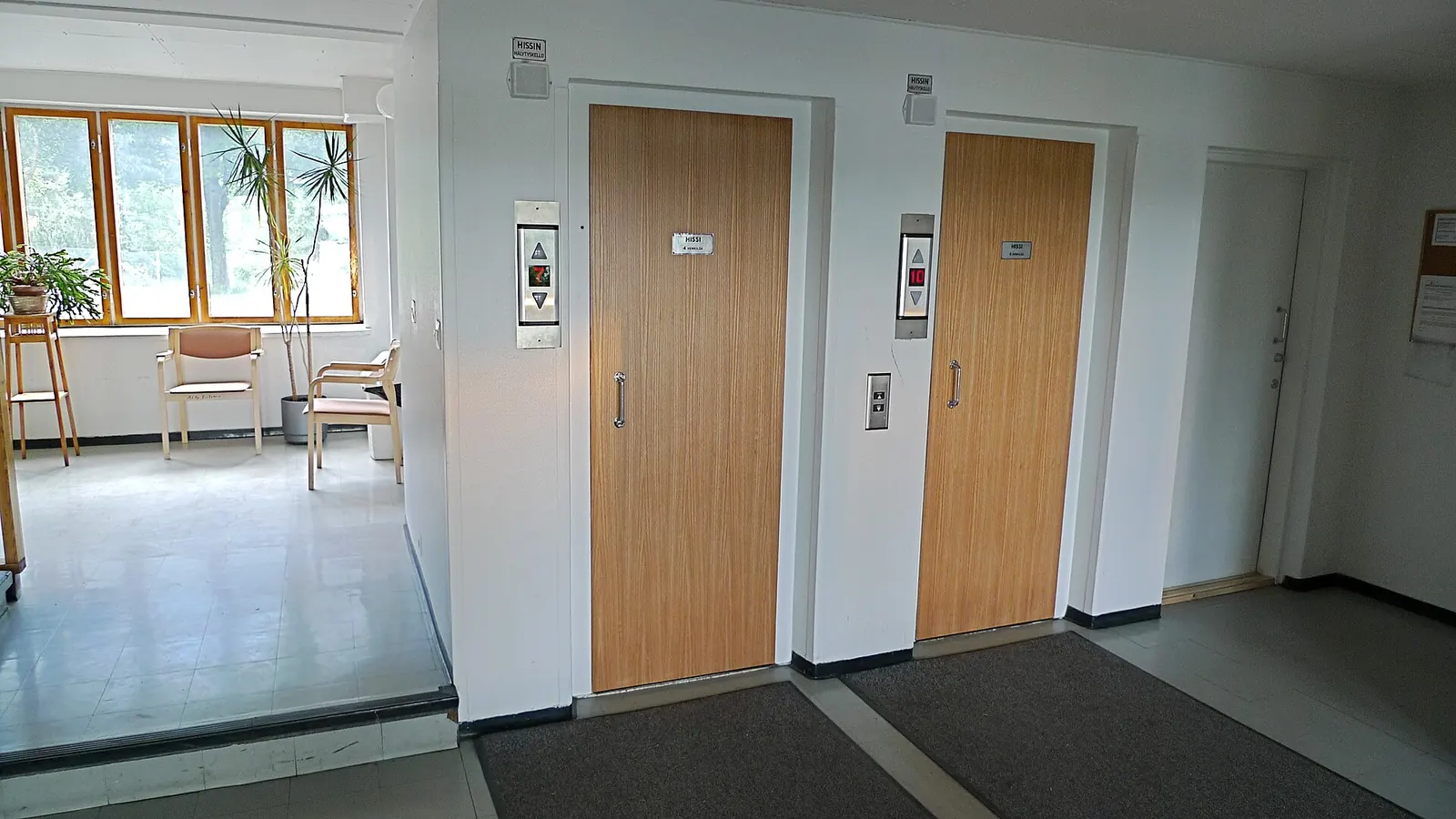
"Viitatornin aula 2009" by Erkkap is licensed under CC BY 3.0.
The short answer
How long does it take to get someone out of a Lift? It depends on the contract and the location, but your contract should set out a maximum response time for entrapments. LML typically stipulates 20 to 30 minutes for passenger entrapments during normal working hours in metropolitan areas.
Lifts are among the safest forms of transport in the world, however, passenger entrapments may still happen, for example, following a power outage, a door fault or the activation of a safety device. It is frightening for the person inside, and how the next few minutes go depends on how well the Building Manager has prepared.
The first five minutes
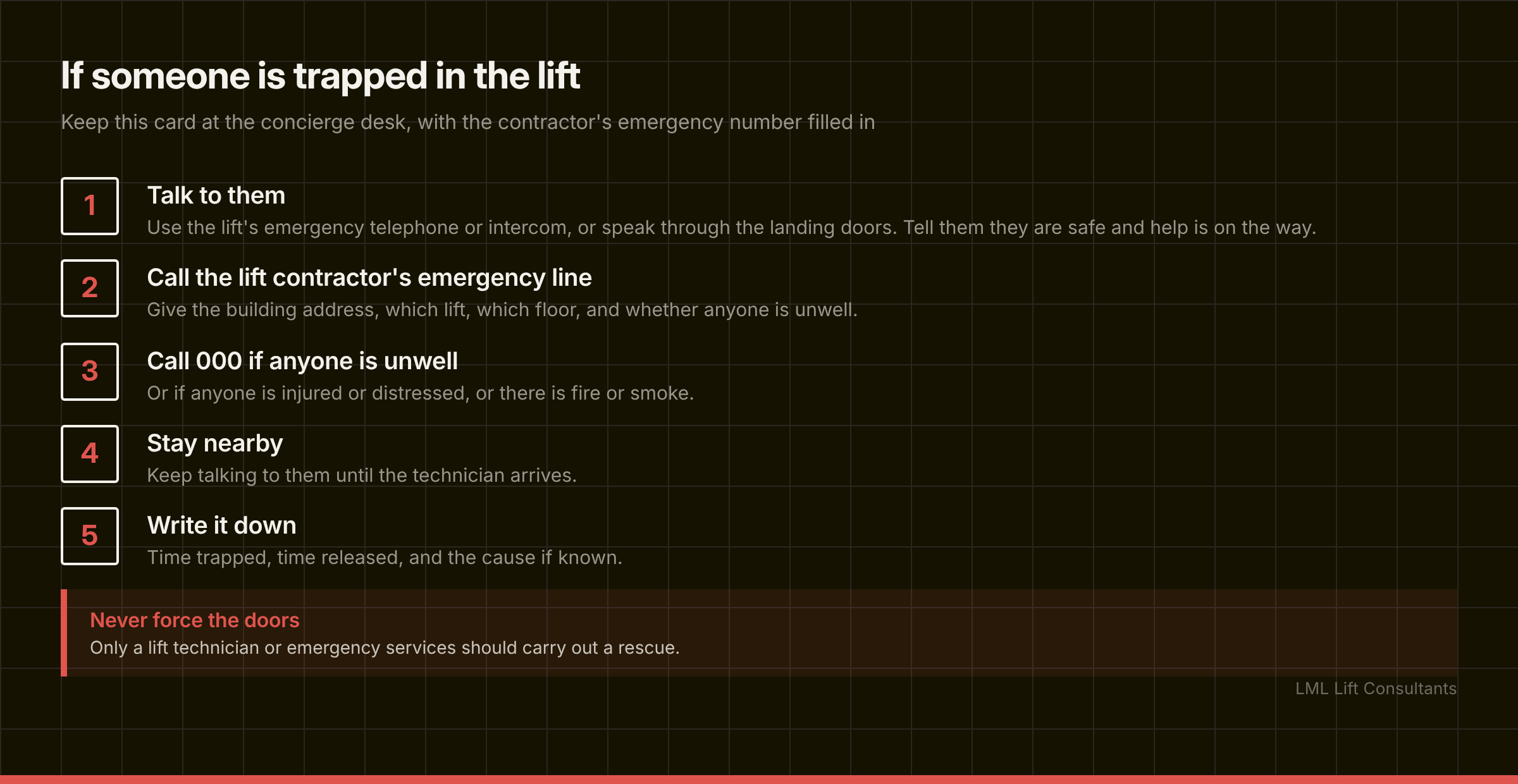
Talk to them. Use the Lift's emergency telephone or intercom, or speak through the landing doors, and tell them they are safe and help is on the way.
Call the Lift contractor's emergency line. Give the building address, which lift, which floor, and whether anyone is unwell.
Call 000 if anyone is unwell, injured or distressed, or if there is fire or smoke.
Stay nearby and keep talking to them until the Technician arrives.
Write down the time they were trapped, the time they were released and the cause, if known.
Never try to open the doors yourself
Forcing lift doors or trying to lower the car is dangerous for you and the passengers. Only trained lift technicians or emergency services should carry out a rescue.
How quickly the contractor should respond
Your maintenance contract should set a response time for entrapments, and passenger entrapments should take priority over ordinary breakdowns. LML typically stipulates 20 to 30 minutes for passenger entrapments during normal working hours in metropolitan areas. Some connected Lifts can be reset remotely by the Lift Contractor, though only in certain conditions. If your contract doesn't specify one, add it at renewal. See Before you renew your lift maintenance contract.
After the rescue: finding the cause
Every entrapment should have a recorded cause. Ask the contractor what happened and what was done to stop it recurring. Repeat entrapments on the same Lift point to a problem that is being reset rather than fixed.
Common causes include door faults, power interruptions and safety devices tripping. When the same Lift keeps trapping people, the cause is often in the doors or the controller.
Fix door faults promptly, since door problems are a common cause of breakdowns.
Have the Lifts audited independently once a year.
Plan modernisation for Lifts that keep failing.
Put the card up
Print the five-step card and keep it at the concierge desk and in the building manager's office, with the contractor's emergency number filled in.
Plan the procedure before you need it
The buildings that cope best have these in place already:
Label every Lift with a number or letter the contractor will recognise.
Put the contractor's emergency number at the concierge desk, in the building manager's phone and on the wall card.
Make sure the emergency phone answers, and that the answering service knows the building's address and Lift number, these should automatically be identified by the Lift Company.
Brief concierge and security staff on the five steps, and on what not to do.
Leave Lift keys with trained technicians only.
Keeping calm: what to tell the passenger
People trapped in Lifts are rarely in danger, but they are often frightened:
Tell them they're safe. The Lift's safety devices hold the car securely.
Let them know help is coming, and roughly when.
Keep them talking: ask their name, check how they're feeling, and stay on the line.
Ask about medical needs, such as medication, pregnancy or a heart condition, and pass them on.
A follow-up checklist
Once everyone is out safely:
Record the time trapped, time released, number of people, Lift number and cause, if known.
Get the cause from the contractor in writing, with what was done to stop it happening again.
Check that the emergency phone worked as it should.
Look for patterns. Two or more entrapments on the same Lift in a few months deserve an independent look.
Tell the owner or committee, and include entrapments in regular building reports.
If one particular Lift in your Building is experiencing excessive entrapments, remove the Lift from service (multiple Lifted buildings) and ask for the Lift company to provide a detailed root cause analysis and an unconditional statement that the Lift is safe to be placed back into service.
5 steps
on a card at the concierge desk, with the contractor's emergency number filled in
Questions people ask
How long does it take to get someone out of a Lift?
It depends on the contract and the location. Your contract should set a maximum response time for entrapments. LML typically stipulates 20 to 30 minutes for passenger entrapments during normal working hours in metropolitan areas.
Should the fire brigade be called for a Lift entrapment?
Call 000 if anyone is unwell, injured or in distress, or if there is fire or smoke. Otherwise call the Lift contractor.
Who pays for an entrapment callout?
A comprehensive maintenance contract usually covers it, dependent on the cause, however, check your agreement to be sure.
Help with entrapment response
LML Lift Consultants details entrapment response times into maintenance agreements, audits emergency communication devices, investigates repeat failures and writes incident Reports.
{"@context":"https://schema.org","@graph":[{"@type":"Article","@id":"https://www.lmlliftconsultants.com.au/insights/trapped-in-lift-building-manager-guide#article","headline":"Someone is trapped in the Lift: a Building Manager's guide","description":"What a Building Manager should do when someone is stuck in the Lift: the first few minutes, who to call, what response times to expect, and how to stop it happening again.","image":"https://cdn.prod.website-files.com/6a7fb1da29c27a176bd73b52/6ab1c729c285e44560268c89_fWBxcJWg.png","datePublished":"2026-10-02T10:30:00.000Z","dateModified":"2026-10-02T10:30:00.000Z","author":{"@id":"https://www.lmlliftconsultants.com.au/#organisation"},"publisher":{"@id":"https://www.lmlliftconsultants.com.au/#organisation"},"mainEntityOfPage":{"@id":"https://www.lmlliftconsultants.com.au/insights/trapped-in-lift-building-manager-guide#webpage"},"inLanguage":"en-AU"},{"@type":"WebPage","@id":"https://www.lmlliftconsultants.com.au/insights/trapped-in-lift-building-manager-guide#webpage","url":"https://www.lmlliftconsultants.com.au/insights/trapped-in-lift-building-manager-guide","name":"Trapped in a Lift: A Building Manager's Guide","isPartOf":{"@id":"https://www.lmlliftconsultants.com.au/#website"},"breadcrumb":{"@id":"https://www.lmlliftconsultants.com.au/insights/trapped-in-lift-building-manager-guide#breadcrumb"},"primaryImageOfPage":"https://cdn.prod.website-files.com/6a7fb1da29c27a176bd73b52/6ab1c729c285e44560268c89_fWBxcJWg.png","inLanguage":"en-AU"},{"@type":"BreadcrumbList","@id":"https://www.lmlliftconsultants.com.au/insights/trapped-in-lift-building-manager-guide#breadcrumb","itemListElement":[{"@type":"ListItem","position":1,"name":"Home","item":"https://www.lmlliftconsultants.com.au/"},{"@type":"ListItem","position":2,"name":"Insights","item":"https://www.lmlliftconsultants.com.au/insights"},{"@type":"ListItem","position":3,"name":"Someone is trapped in the Lift: a Building Manager's guide","item":"https://www.lmlliftconsultants.com.au/insights/trapped-in-lift-building-manager-guide"}]}]}
Get an independent view before you decide
We sell no equipment and take no commissions. Tell us about your building and a consultant will come back to you.