Services / Auditing
An independent, evidence-based picture of what condition your lifts, escalators and moving walks are actually in — not what a contractor's service sheet says.
1,870
units audited in 2025
12 months
of breakdown records analysed for trends
Scored
every finding photographed and scored

Most owners commission an audit at one of four moments: before renewing or tendering a maintenance agreement, when breakdowns start rising, when a building changes hands, or when a committee needs to justify capital expenditure. If any of those apply, an audit gives you the evidence to act.
A clear written report with findings, photographic evidence, a condition score per asset and a prioritised set of recommendations. It is written so a committee or board can act on it without needing a technical background.
All findings are documented in a detailed Schedule of Corrective Works, issued to the maintenance contractor for rectification under a comprehensive maintenance agreement.
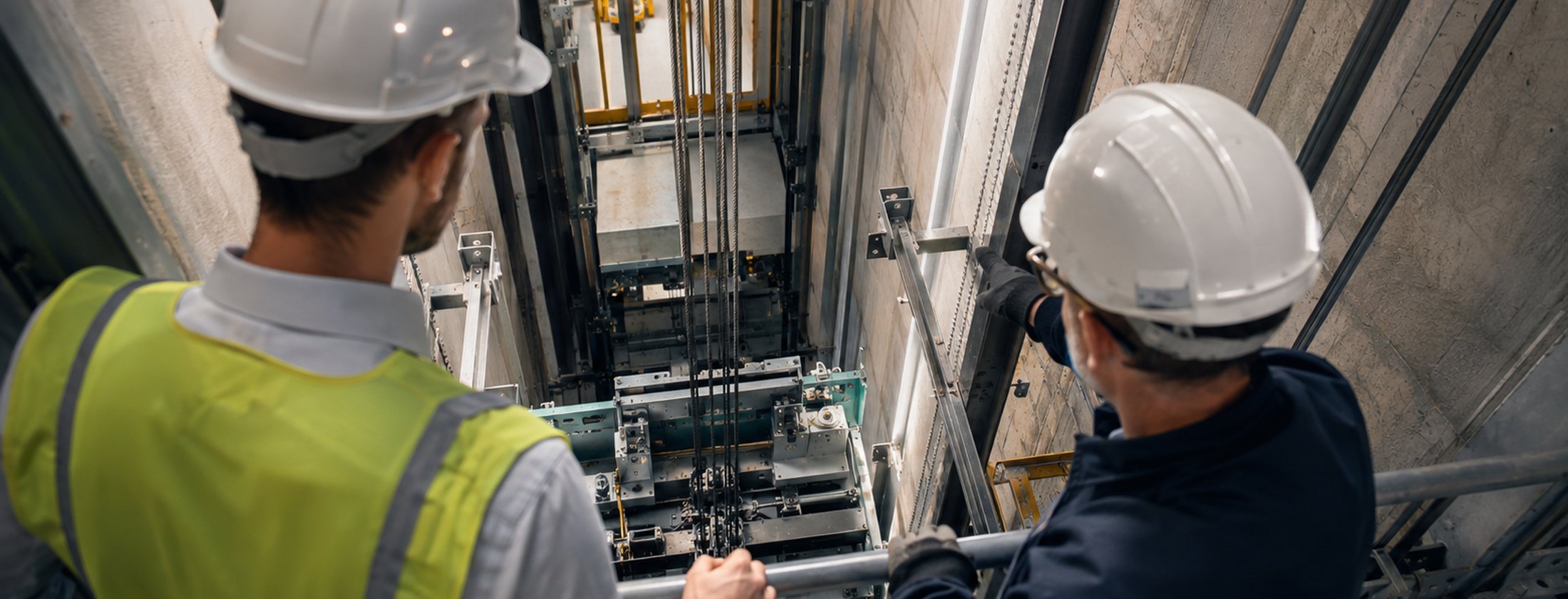
Every LML audit begins on site: shaft, car top, machine and controller examined against standardised criteria and photographed for the report.
FAQ
A lift condition audit is an independent physical inspection of a lift and its major components, producing a documented assessment of condition, compliance position and performance. It is worth separating it from a lifecycle or feasibility assessment, which is a different piece of work: the condition audit establishes how the equipment has been maintained and what state it is in now, while lifecycle and feasibility work looks ahead to remaining useful life, obsolescence position and replacement options. Obsolescence in particular is assessed at feasibility stage rather than as part of a maintenance and condition audit.
A full LML audit covers the machine, controller and drive, ropes or belts and their terminations, the car and its fixtures, doors and door operators (the single largest source of breakdowns on most installations), safety gear and speed governor, the lift shaft, pit and machine room, emergency communications, and a review of the maintenance and callout records. We also run a lift car ride quality analysis, which gives further insight into how the equipment is actually performing. Every finding is photographed and scored, every recommendation is costed and prioritised, and a defect list is issued to the incumbent maintenance provider to action.
For most commercial and residential buildings, a full independent condition audit once during the term of the maintenance agreement, typically every three to five years, is appropriate. Some of our national portfolio clients audit annually, and a shorter cycle is warranted where equipment is ageing, heavily used, or approaching a contract renewal or a major capital decision.
That cycle is separate from the routine maintenance and inspection your contractor performs, and does not replace it. An independent audit is a different exercise with a different purpose: it measures the asset, not the servicing.
A maintenance contractor's inspection confirms the equipment is running and identifies work that contractor can carry out. An independent audit measures condition, compliance position, performance and remaining life against the applicable standards.
The two produce different documents for different purposes. A service report tells you what was done last visit. An audit tells you what condition the asset is in, what it will need over the next ten years, what that is likely to cost, and where the current maintenance is falling short of what is being paid for.
Yes, for part of it. Inspecting the car top, pit and safety gear requires the lift to be taken out of normal service for a period. Every LML consultant is a qualified lift technician, so we carry out that work ourselves rather than requiring your maintenance contractor to attend, which keeps a chargeable contractor visit off the cost of the audit. We do ask the contractor to attend in the smaller number of cases where uptime is critical or site rules require it, hospitals being the obvious example.
Site attendance is usually three to four hours per lift, varying with the rise of the building. In multi-lift buildings we sequence the work so that at least one car in each group stays in service, and we schedule outages outside peak periods where the building's use allows. In single-lift residential buildings we agree the window with the manager in advance and keep it as short as the inspection allows.
A written report containing photographed findings, a condition score for each asset, an assessment of remaining useful life, a review of the maintenance and callout records, a lift car ride quality analysis, and a prioritised action list with indicative costs and timing.
Reports open with an executive summary, so they can be read by the people who have to act on them (committees, managers and boards), not only by engineers. The action list separates items requiring immediate attention from those that can be planned and budgeted, which is what allows a committee to stage expenditure rather than face it all at once. The defect list is issued separately to the incumbent maintenance provider.
Yes, and it is one of the most common reasons LML is engaged. An independent assessment establishes whether proposed works are technically necessary, whether the scope is appropriate, and whether the price is competitive.
The outcome is not always a reduction in scope. Audits sometimes confirm the contractor's position, and sometimes identify items the proposal missed. What changes is that the owner is making the decision on independent evidence rather than on the recommendation of the party being paid to carry out the work.
Yes. Lift equipment is frequently one of the largest undisclosed capital liabilities in a commercial or residential acquisition, and its condition is not apparent from a walk-through or from the fact that it is running.
Technical due diligence identifies equipment age and condition, the obsolescence position of the control system, maintenance history and contractor arrangements, known and outstanding defects, compliance position, and anticipated capital expenditure over the holding period. A controller approaching obsolescence can represent a six-figure liability that does not appear anywhere in the vendor's disclosure.
A physical condition assessment of each unit, a review of maintenance records and contractor arrangements, the obsolescence position of major components, the compliance position including registration status where applicable, outstanding defects, and a forecast of capital expenditure over the intended holding period.
The deliverable is written to transaction timeframes and is structured so that identified liabilities can be quantified and, where appropriate, taken into negotiation.
Tell us the building, the number of lifts and what's prompting the question. We'll advise on the right scope of audit.