Escalator and Moving Walk safety: what Centre Managers should check
What Shopping Centre and Facilities Managers should check on Escalators and Moving Walks, from handrail guides to stopping distances.
LML Lift Consultants
6
min read
September 28, 2026
The short answer
Why are soft-soled shoes banned on some Escalators? Their soft material can be drawn into the gap between the step and the side panel, or under the comb-plates, causing injury. Some Shopping Centres have added a pictogram of soft-soled shoes to the banned list on the safety signage at the entrance to the Escalator.
Escalators and Moving Walks are among the safest ways to move people. Having said this, they are still machines, and on the rare occasion when an accident does happen, unfortunately this usually involves a child, loose footwear, a pram or mobility scooter, or in some cases equipment which hasn't been properly maintained.
December is the busiest month of the year for most Shopping Centres when Escalators carry their biggest crowds and riders appear to be least careful. This guide sets out what Shopping Centres and Facilities Managers should check, and things to ask their Maintenance Contractor.
How accidents happen
Most escalator injuries come from how people ride:
Escalators and moving walks are cool; however, they are not a toy.
Richie Lobert
Soft-soled footwear: we have investigated several incidents where soft-soled shoes were drawn into the gap between the step and the side panel, or under the comb plate at the top or bottom. The soft material grips when it rubs against the side panel. Some airports and shopping centres now ban this footwear on escalators, and we support that.
Children sitting on steps, touching the sides or playing on the handrail.
Prams and trolleys, which should use the lift.
Dogs: paws and comb plates should never meet.
Riders dragging their shoes along the side brushes, or walking beside the handrail.
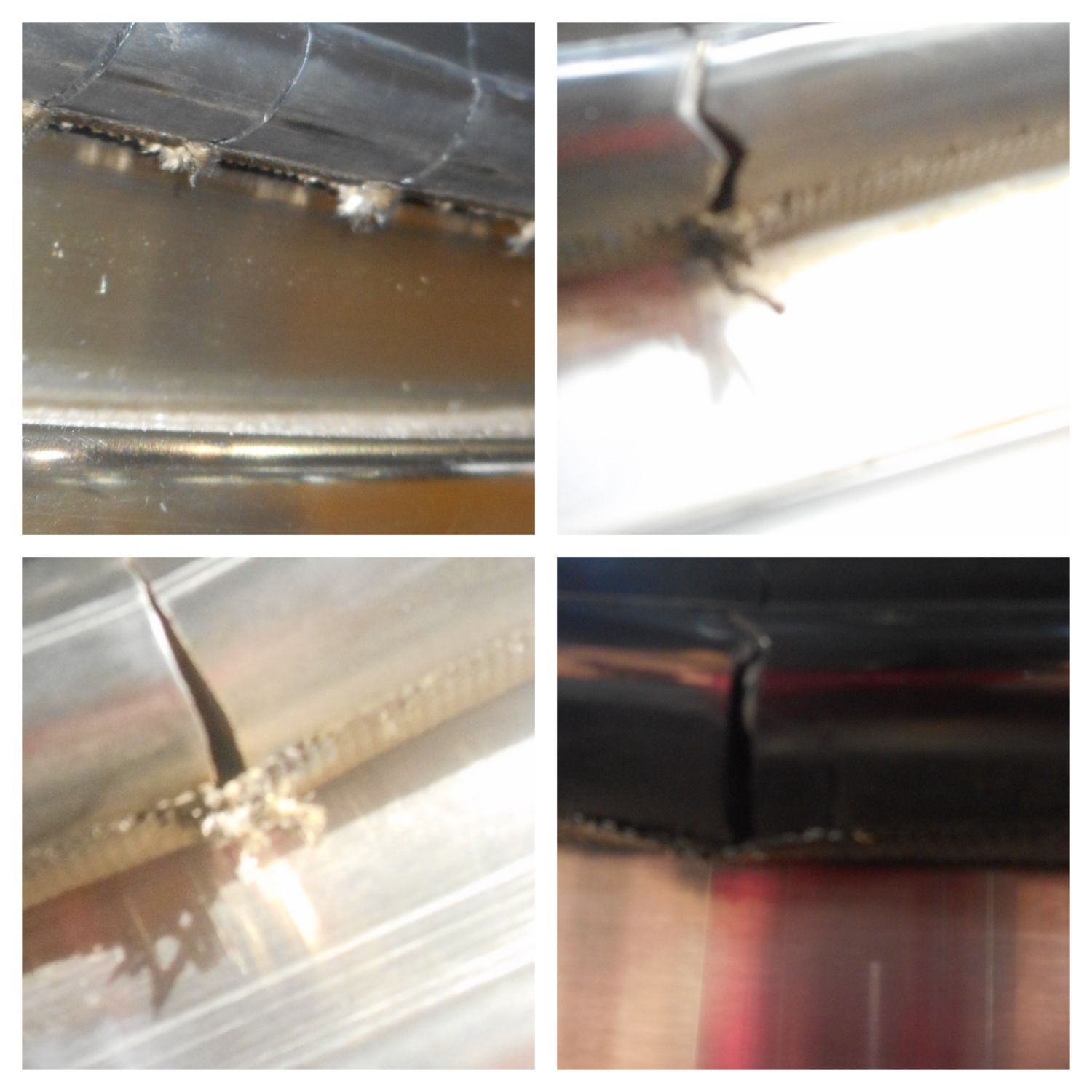
Some accidents come from the equipment itself. In 2022, a child holding the handrail of a moving walk in a New South Wales shopping centre had a thumb severed. We don't know that incident's cause. In our experience, though, the aluminium guides under a handrail can wear until they are razor-thin and break, leaving sharp metal protruding beneath the handrail.
Why an Escalator doesn't stop instantly
Escalators have many safety devices that stop the unit when something goes wrong. An Escalator must not stop instantly: a sudden stop could throw passengers off balance and could cause a fall down the steps, with people falling onto those behind them (the domino effect).
Up to 1 metre
an Escalator at 0.5 m/s can keep travelling after a safety device trips
The Australian Standard for Escalators and Moving Walks sets a range for stopping distances. These are the figures LML quotes in its own material:
0.50 m/s: minimum stopping distance 0.20 m; maximum stopping distance 1.00 m
0.65 m/s: minimum stopping distance 0.30 m; maximum stopping distance 1.30 m
0.75 m/s: minimum stopping distance 0.35 m; maximum stopping distance 1.50 m
An Escalator travelling at 0.5 metres per second may therefore keep moving for up to a metre after a safety device trips. If a hand or foot is caught in the comb plate, or between a step and the side panel, the unit can travel that full metre before it stops, which is why prevention and maintenance count for so much. The deceleration rate measured along the incline must not exceed 1 m/s².
The safety devices on a modern Escalator
The ones which can be seen:
Comb plate switches at the top and bottom
Handrail entry switches where the handrail enters the balustrade
Emergency stop buttons
Yellow demarcation lines on step edges
Skirt brushes along the side panels
Inside, a modern Escalator also monitors the drive chain, detects step or chain breakage, and can have skirt panel safety devices.
Every one of these devices must work as designed and be tested regularly.
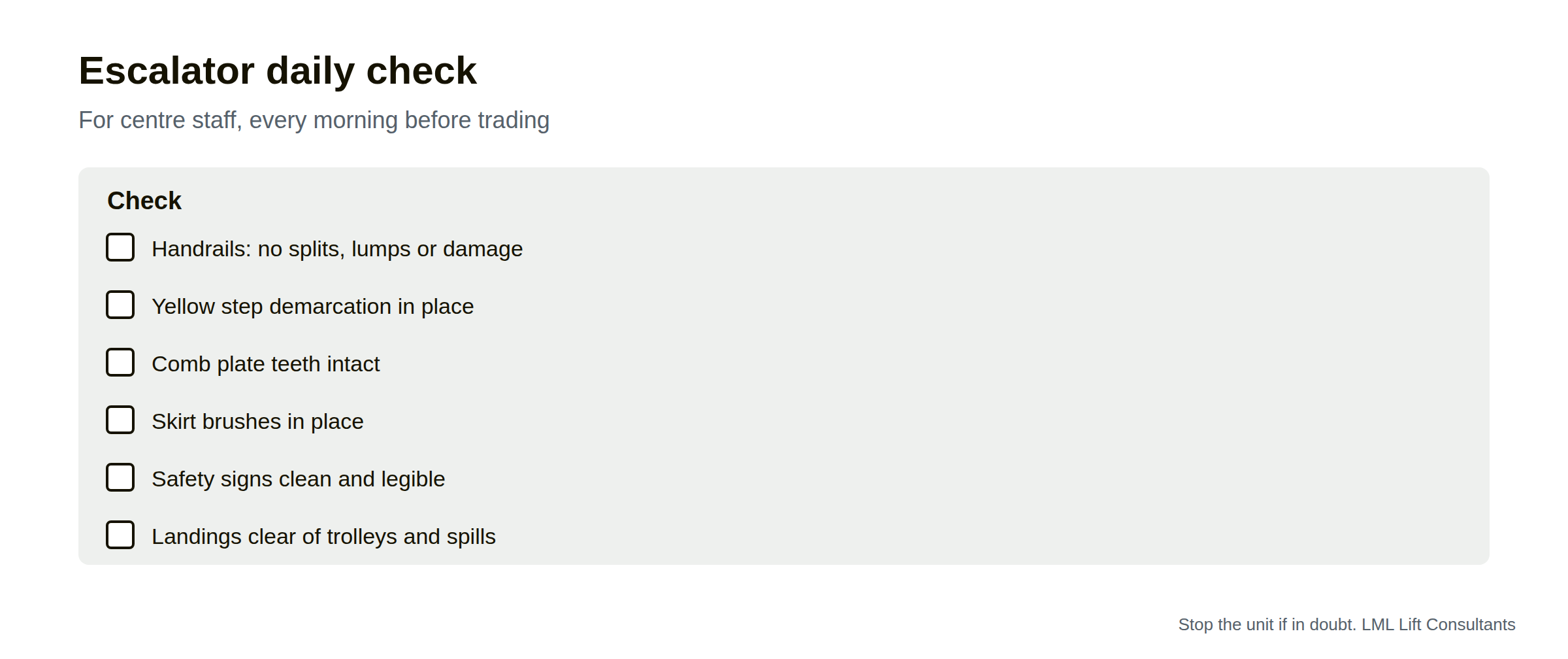
A checklist for Centre Managers
Every day (Centre Staff)
Walk each Escalator and Moving Walk. Look for damaged, split or lumpy handrails, missing demarcation strips, broken, missing or sharp (needle point) comb-teeth, and damaged or missing skirt brushes.
Check safety signs and decals are in place and legible.
Keep the landings clear of trolleys, spills and obstructions.
Report anything unusual immediately, and stop the unit if in doubt.
From your maintenance contractor
Lift the handrail to check the guides
Handrail guides can wear razor-thin under the handrail. Ask your contractor to partially lift each handrail at inspection and confirm the guides are sound.
Handrail guide inspections, including partially lifting the handrail to check the guides underneath for wear, splits or sharp edges. A visual check from outside isn't enough: we found a sharp spike under a handrail only after peeling it back to investigate a small lump.
Records of safety device tests, including stopping distances.
Prompt repair of anything found at inspection visits.
Once a year
An independent audit of every Escalator and Moving Walk. We recommend auditing Escalators after hours, when the consultant can inspect the truss and difficult areas without crowds. Book an escalator audit.
Damaged, cracked and split Escalator handrails found during a safety inspection.
Helping the public ride safely
Signage works best where riders will see it. The Australian Standard sets minimum requirements for Escalator signage, so check that yours meet them.
Standard pictogram decals at each entry, kept clean and legible.
Extra signage for dog-friendly centres and for footwear warnings, where appropriate.
The five riding rules
Step on and off carefully
Face forward and hold the handrail
Keep clear of the sides
Supervise children closely
Use the Lift for prams, trolleys and large dogs
Questions people ask
Why are soft-sole shoes banned on some Escalators?
Their soft material can be drawn into the gap between the step and the side panel, or under the comb plate, causing injury.
How far does an Escalator travel after the emergency stop is pressed?
It depends on its speed. Under the Australian Standard, an escalator at 0.5 m/s must stop within 0.2 to 1.0 metres.
How often should Escalators be inspected?
Your contractor services them regularly. An independent audit once a year, ideally after hours, confirms the maintenance is being done properly.
Escalator audits by LML
LML Lift Consultants audits Escalators and Moving Walks in Shopping Centres, airports and transport hubs across Australia and New Zealand.
{"@context":"https://schema.org","@graph":[{"@type":"Article","@id":"https://www.lmlliftconsultants.com.au/insights/escalator-safety-centre-managers#article","headline":"Escalator and Moving Walk safety: what Centre Managers should check","description":"What Shopping Centre and Facilities Managers should check on Escalators and Moving Walks, from handrail guides to stopping distances.","image":"https://cdn.prod.website-files.com/6a7fb1da29c27a176bd73b52/6ab1c725c285e44560268c35_bwhLHOLv.jpeg","datePublished":"2026-09-28T07:14:08Z","dateModified":"2026-09-28T07:14:08Z","author":{"@id":"https://www.lmlliftconsultants.com.au/#organisation"},"publisher":{"@id":"https://www.lmlliftconsultants.com.au/#organisation"},"mainEntityOfPage":{"@id":"https://www.lmlliftconsultants.com.au/insights/escalator-safety-centre-managers#webpage"},"inLanguage":"en-AU"},{"@type":"WebPage","@id":"https://www.lmlliftconsultants.com.au/insights/escalator-safety-centre-managers#webpage","url":"https://www.lmlliftconsultants.com.au/insights/escalator-safety-centre-managers","name":"Escalator Safety: A Checklist for Centre Managers","isPartOf":{"@id":"https://www.lmlliftconsultants.com.au/#website"},"breadcrumb":{"@id":"https://www.lmlliftconsultants.com.au/insights/escalator-safety-centre-managers#breadcrumb"},"primaryImageOfPage":"https://cdn.prod.website-files.com/6a7fb1da29c27a176bd73b52/6ab1c725c285e44560268c35_bwhLHOLv.jpeg","inLanguage":"en-AU"},{"@type":"BreadcrumbList","@id":"https://www.lmlliftconsultants.com.au/insights/escalator-safety-centre-managers#breadcrumb","itemListElement":[{"@type":"ListItem","position":1,"name":"Home","item":"https://www.lmlliftconsultants.com.au/"},{"@type":"ListItem","position":2,"name":"Insights","item":"https://www.lmlliftconsultants.com.au/insights"},{"@type":"ListItem","position":3,"name":"Escalator and Moving Walk safety: what Centre Managers should check","item":"https://www.lmlliftconsultants.com.au/insights/escalator-safety-centre-managers"}]}]}
Get an independent view before you decide
We sell no equipment and take no commissions. Tell us about your building and a consultant will come back to you.