Modernisation
Destination control: is it right for your building?
How destination control works, when it cuts waiting times, when it doesn't, and what 222 Exhibition Street shows about fitting it to existing Lifts.
How destination control works, when it cuts waiting times, when it doesn't, and what 222 Exhibition Street shows about fitting it to existing Lifts.
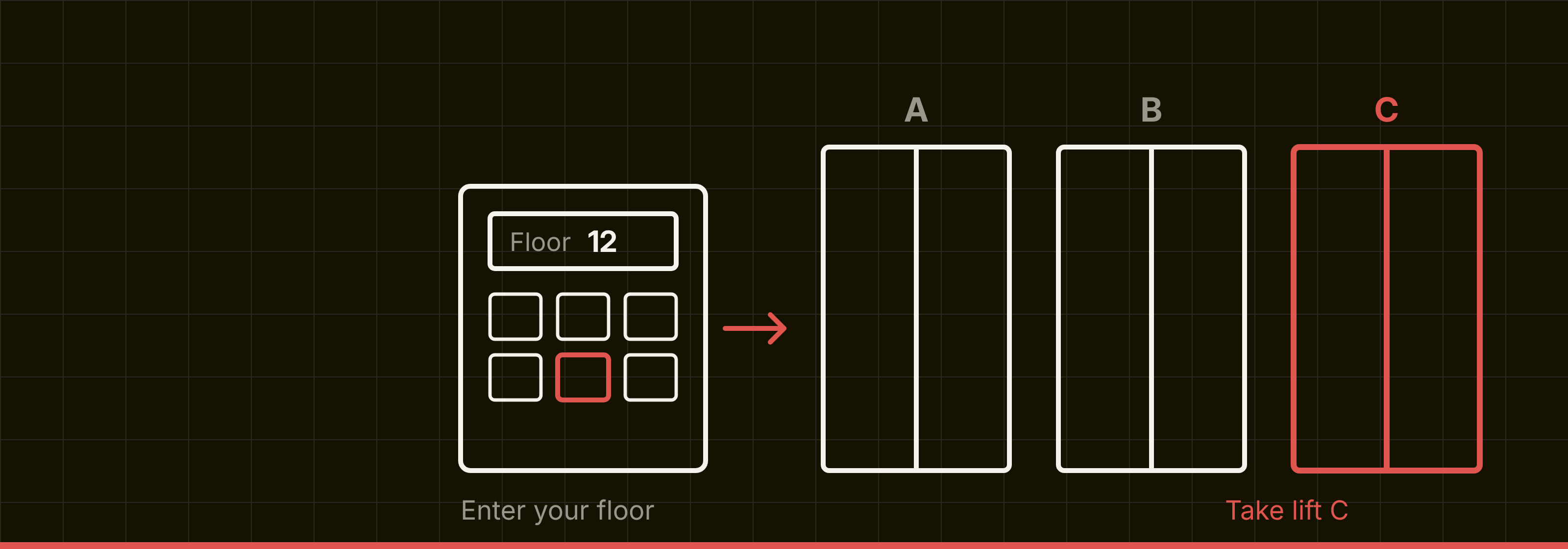
What is destination control in Lifts? A system where passengers choose their floor before entering, and the system assigns the best Lift, grouping passengers to similar floors and areas in the building to reduce stops.
Want an independent view of your own lifts?
Talk to a consultantIn a conventional Lift lobby, you press up or down, wait for any Lift, get in and press your floor. In peak times for example morning, many passengers enter same car and all could be going to all floors. So passengers in this example travelling from lobby to upper floors have a long time to destination, due to all stops on way up. With destination control, you choose your floor on a panel in the lobby, and the system tells you which Lift to take.
The change looks small, but in a busy building it can mean shorter waits and faster journeys, because the system groups people going to the same floors. It doesn't suit every building, though, and it needs care when it's introduced.
| Step | Conventional | Destination control |
|---|---|---|
| Calling the lift | Press up or down at the landing. | Enter your floor at a panel in the lobby or on the landing. |
| Which car you take | Whichever one arrives. | The panel tells you which lift to take. |
| Choosing your floor | Press it inside the car. | Already entered at the panel. |
| Stops on the way | The car stops wherever it is asked. | Grouped with passengers going to nearby floors, so fewer stops. |
Richie Lobert, who co-founded LML, was Major Projects Manager for New Technologies at Schindler, working on destination control systems.
As a rule of thumb, destination control helps most in office towers with four or more lifts in a group and strong morning peaks, and least in small groups and in residential buildings with low traffic. A traffic study is what settles it for a particular building.
LML can assist with independent passenger handling modelling for performance on Conventional versus Destination Control for your Building, for both new Builds and modernisation projects.
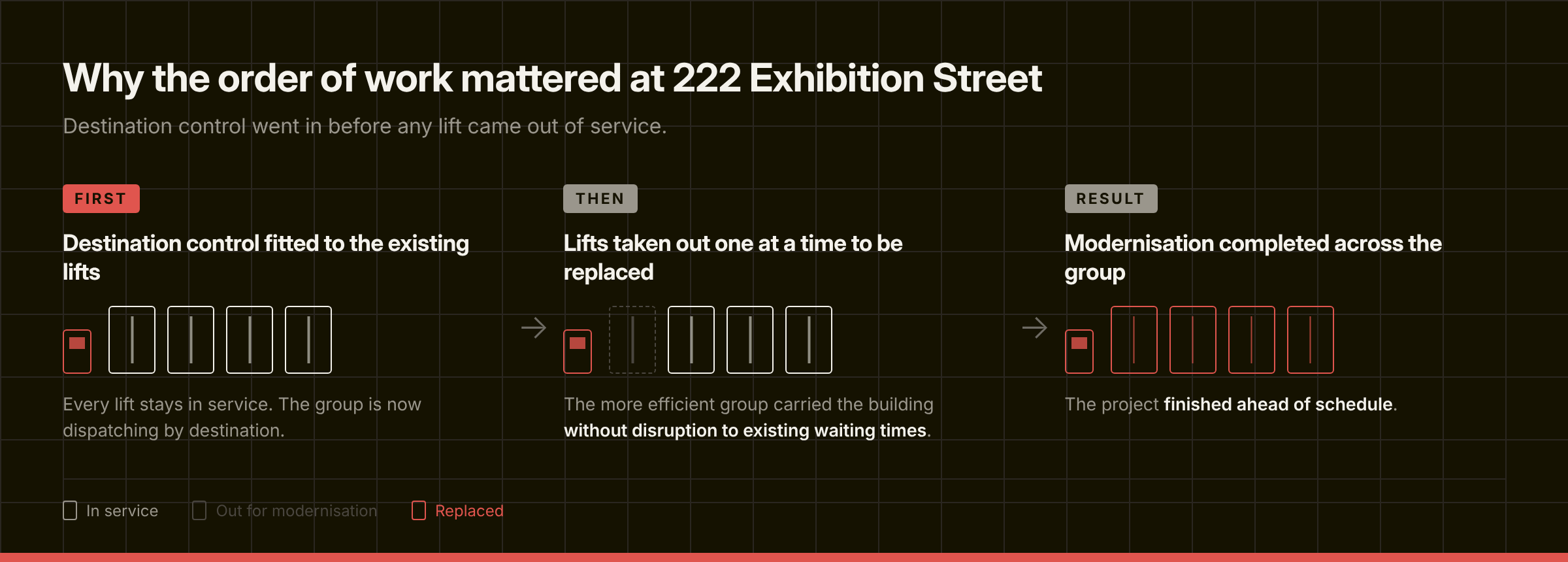
Destination control can be added to existing Lifts, and sometimes it should come first. At 222 Exhibition Street in Melbourne, it was fitted to the existing Lifts before any Lifts were removed from service for modernisation. The more efficient DCS group kept the building moving without disruption to existing waiting times while Lifts were replaced, and the project finished ahead of schedule.
It is a credit to all involved that such a high standard project was delivered.
Richie Lobert, on 222 Exhibition Street
Early complaints usually concern finding and knowing how to use the panels and not knowing which Lift to take. Clear signage, tenant training and lobby staff assisting in the first week of the move from conventional to destination control will resolve most of them. The lift company usually runs training before handover or at handover itself.
Whether destination control will help depends on how people use the building. A traffic analysis models waiting and journey times before you commit.
Adding destination control to existing Lifts involves more than new buttons:
The order of work matters as well. As at 222 Exhibition Street, fitting destination control first can make the group efficient enough to keep serving tenants while individual Lifts are taken out for modernisation.
Destination control changes how a group of Lifts shares its passengers. Because people going to the same floors or floors close together travel together, each Lift makes fewer stops and completes its round trip sooner. In busy buildings, that can mean shorter journeys and a group that moves more people at peak times and to their destination quicker.
How much more efficient in passenger movement a particular building would gain depends on how its own traffic behaves.
Most complaints about destination control come down to design details:
A short explainer, tenant training, signs and a few days of lobby staff help passengers adjust to destination control within a short time.
A system where passengers choose their floor before entering, and the system assigns the best lift, grouping passengers to reduce stops.
Often, yes. It can be fitted as part of a modernisation or before modernisation of Lifts commences.
Sometimes. Acceptance in residential buildings has been lower, and it depends on the building and the panel design. However, we are seeing a higher intake in residential and hotels due to the preference for technology that DCS can provide. For example, in a residential building it is possible to send a QR code to friends visiting so they can access your floor.
LML Lift Consultants models lift traffic, specifies destination control and manages upgrades. We sell no equipment and take no commissions.
Talk to us or call 1300 001 565.
We sell no equipment and take no commissions. Tell us about your building and a consultant will come back to you.