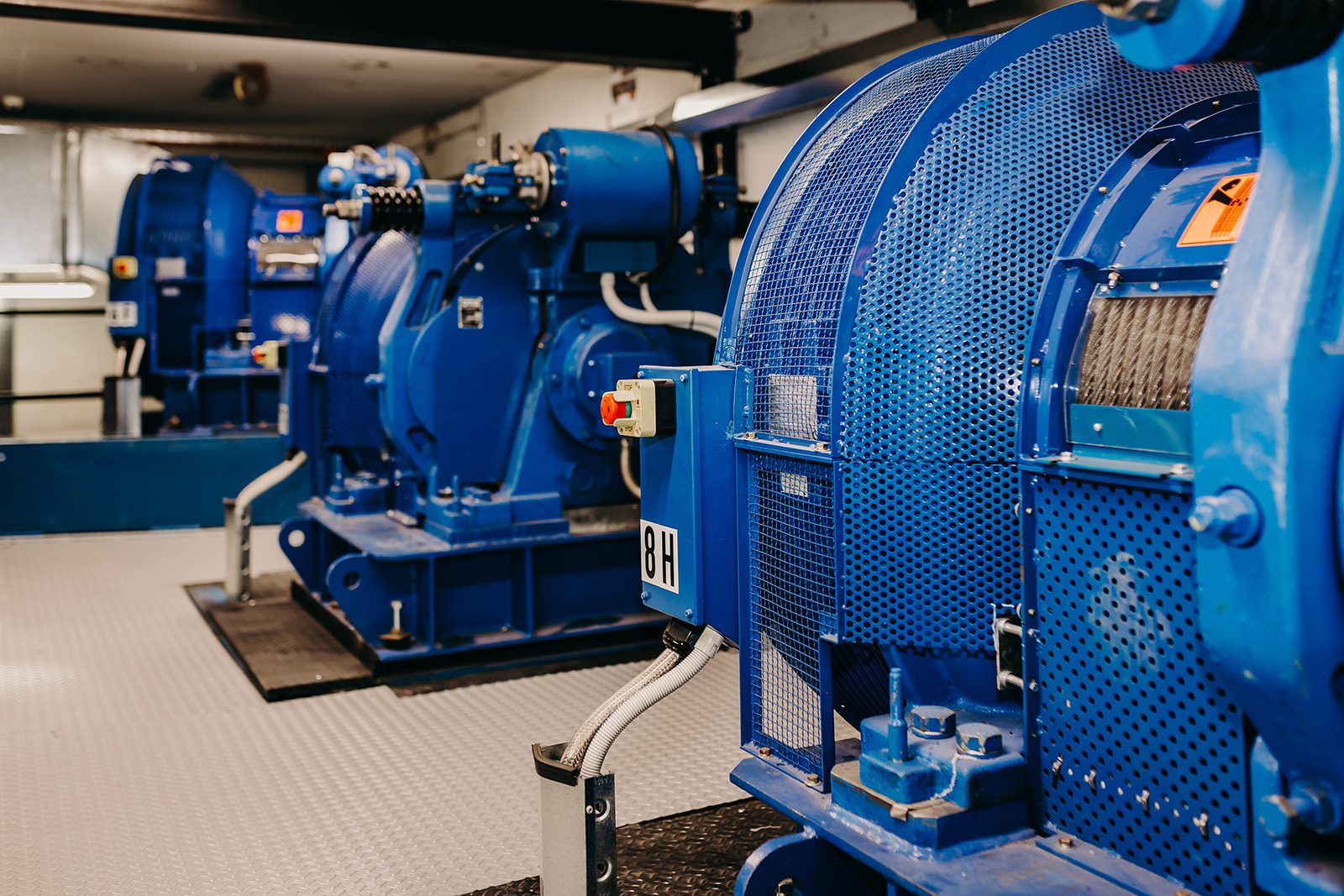
We evidence every assessment on site: machine, drive, ropes, controller and doors examined against standardised criteria and photographed for the report.
Who we help / Owners corporations & strata
Committees are routinely asked to approve significant lift spending on the word of the company that will be paid to carry out the work. We give owners corporations, strata committees and OC managers an independent alternative: a written position on condition, cost and urgency that owners can read, question and rely on.
Usually at one of five moments: a maintenance agreement coming up for renewal, a contractor proposing a modernisation, breakdowns starting to affect residents, a committee needing evidence to support a levy, or a manager taking on a building with no history on the lifts. Any of those is a reasonable point to get an independent position.
A written report in plain language: findings, photographic evidence, a condition score for each lift, and prioritised recommendations with indicative costs and timing. It is written to be read by owners who are not engineers, tabled at a general meeting, and defended if it is challenged.
Sound familiar?
We assess the equipment independently and test the proposed scope against what the asset needs. Committees frequently find a staged path exists that costs materially less and can be defended to owners.
We produce reporting written for owners rather than engineers: findings, photographs, condition scores and prioritised recommendations, in language that holds up when questioned at a general meeting.
We review the agreement against what is being delivered (attendance, response times, exclusions, defect close-out), benchmark the price and scope, and where warranted take it to competitive tender.
Age is sometimes the cause and sometimes the explanation. We separate the two by examining fault patterns, repeat callouts and the maintenance that has been performed, then set out what will fix it.
We establish a baseline: condition and compliance position for every lift, defect register, and a forecast of when capital works will be required, so the building can be budgeted rather than reacted to.
An independent technical position gives a divided committee a common set of facts to work from. Where it helps, we attend the meeting and answer questions directly so the decision can be made and recorded.
We evidence every assessment on site: machine, drive, ropes, controller and doors examined against standardised criteria and photographed for the report.
How it works
We work alongside the owners corporation manager rather than around them. The manager stays the point of contact with owners, while we provide the technical position and, where it helps, attend the meeting to answer questions directly. The assessment itself covers:
Where works follow, we can specify the scope, tender it competitively and manage delivery on the owners corporation's behalf, so the committee is represented at every stage, not only at the quoting stage.
FAQ
Yes, and it is a substantial part of our work. Owners corporations, strata committees and their managers engage LML directly, usually when a committee needs independent evidence to support a decision.
The most common triggers are a maintenance agreement approaching renewal, a modernisation proposal from the incumbent contractor, breakdowns affecting residents, a levy or special resolution that has to be justified to owners, and a new manager taking over a building with no reliable lift history.
Enough to meet the modernisation cost at the point the equipment reaches end of life. The number therefore depends entirely on the condition and remaining life of your specific installation, not on a rule of thumb.
The practical approach is to establish remaining useful life and likely scope through a condition audit, obtain an indicative cost for that scope, and work backwards to an annual contribution across the remaining years. Doing this early converts an unpredictable special levy into a planned contribution, which is materially easier to carry at a general meeting.
It moves the discussion from opinion to evidence. A committee cannot resolve a technical disagreement by debate, but it can resolve it by reference to an independent assessment that both sides accept the basis of.
Our reports are written for that purpose: condition scored on a consistent basis, findings photographed, options set out with indicative costs and timing, and a recommendation that can be tabled, minuted and defended to owners. That record also protects the committee if the decision is later questioned.
Usually, yes. Separating immediate requirements from medium and longer-term works allows expenditure to be spread across budget cycles rather than raised as a single special levy.
The condition assessment is what makes staging defensible: it identifies which items genuinely cannot wait, which can be deferred and for how long, and what the consequence of deferral is. Staging assembled from successive reactive repairs generally costs more overall than staging planned as a single strategy.
Tell us the building, how many lifts, and what the committee is being asked to decide. We'll advise on the right starting point, and whether you need a full audit or something narrower.