Hydraulic Lift: replace with Machine-Room-Less or upgrade?
When a hydraulic Lift wears out, replacing it with a Machine-Room-Less unit is one option, but not the only option. This article compares it with a full or partial hydraulic upgrade and explains when upgrading makes more sense.
LML Lift Consultants
5
min read
September 29, 2026
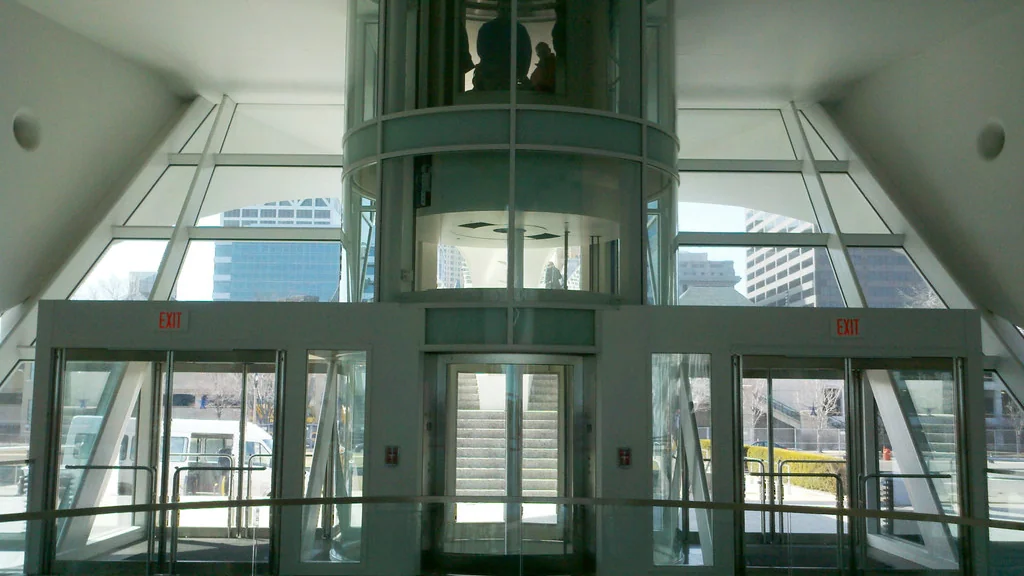
"Round Glass Elevator" by Beige Alert is licensed under CC BY 2.0.
The short answer
Can a hydraulic Lift be converted to a Machine-Room-Less Lift? Often, yes, if the pit, headroom and shaft size meet the MRL unit's requirements. Otherwise, building work may be needed.
When a hydraulic Lift reaches the end of its life, the usual advice is to rip it out and replace it with a Machine-Room-Less (MRL) traction lift. That is often the right answer, but there are other options, and in some buildings they are better.
Modern hydraulic systems have improved a great deal. In the right building, upgrading the hydraulic lift can cost less, take less time and send far less equipment to scrap. This article compares replacement and upgrade, and explains how to choose between them.
How hydraulic lifts work
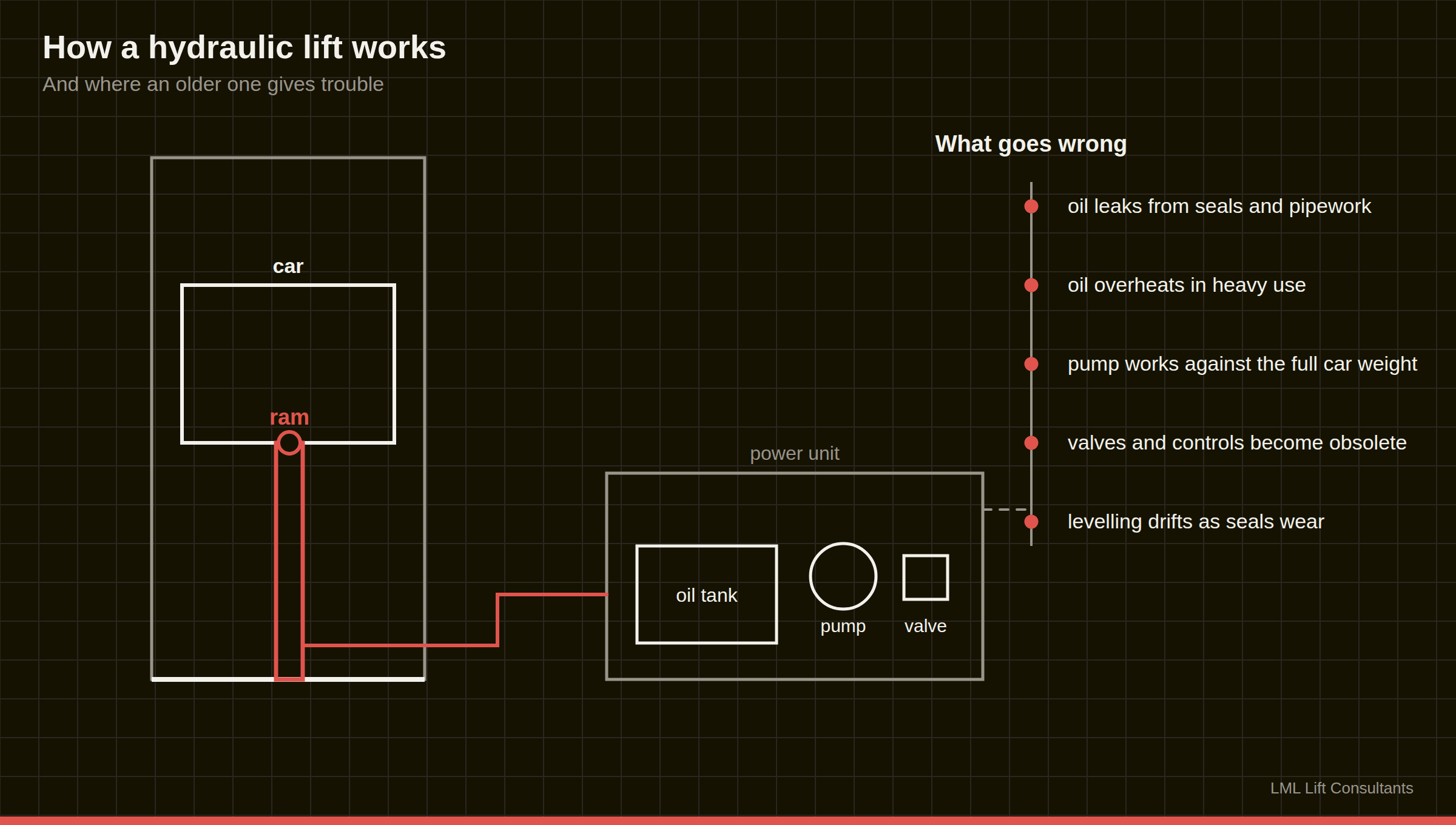
A hydraulic Lift is pushed up by a ram, driven by oil pumped from a tank in a nearby Machine Room. To go down, the Lift releases the oil back to the tank. Hydraulic Lifts are common in Low-Rise buildings because they are simple and need no Machine Room above the liftwell. The Machine Room is usually at the lowest floor, next to the Lift.
Older hydraulic Lifts tend to develop the same problems:
Oil leaks from seals, valves and pipework
Oil overheating in heavy use, which slows the Lift or stops it
High energy use, because the pump works against the full weight of the car every trip
Ageing controls and valves, with parts becoming obsolete
Poor levelling as seals and valves wear
Option 1: Replace with a Machine-Room-Less Lift
The whole hydraulic system is removed and replaced with an MRL traction Lift. This is now the standard approach, and it has clear benefits:
Lower running costs and energy use
Faster travel, and more floors if needed
No oil to leak, overheat or dispose of
Current technology with a long service life ahead
Whether it works depends on the liftwell, which must meet the MRL unit's requirements for pit depth, headroom above the top floor (overrun) and shaft size. Where it doesn't, building work may be needed, which adds cost and time. Every part of the original installation also goes to scrap.
Option 2: Upgrade the hydraulic Lift
The alternative is to keep what's still sound, typically the ram, rails and car frame, and replace the worn parts with modern hydraulic equipment. Modern systems can put the pump and motor outside the tank, run on lower oil volumes and, in some cases, recover energy through regeneration.
Modernising with a highly efficient modern hydraulic system may actually be a more eco-friendly solution.
Richie Lobert, Interlift 2019
An upgrade can be the better choice when:
The ram and rails are in good condition. How that is judged depends partly on the callout history, and replacing the ram seals or repairing the ram can be included as an option in the technical specification.
The liftwell can't easily take an MRL unit without building work
The building only has a few floors to serve, so hydraulic speed is enough
Reducing waste matters to the owner, because less of the original equipment is scrapped
Option 3: A partial upgrade
Where the Lift is broadly sound but specific parts are failing, replacing only the controller, valve block and door equipment can extend its life by several years at lower cost. It is a sensible step when a full project isn't yet affordable, provided the remaining parts are assessed as sound.
Comparing the options
Energy use: lowest with an MRL replacement, lower than the original with a hydraulic upgrade.
Building work: possibly needed for an MRL replacement, rarely needed for a hydraulic upgrade, and none for a partial upgrade.
Equipment scrapped: all of it with an MRL replacement, some with a hydraulic upgrade, and the least with a partial upgrade.
Service life gained: longest with an MRL replacement, long with a hydraulic upgrade, and shortest with a partial upgrade.
Suits: an MRL replacement for shafts that fit an MRL and buildings wanting increased speed; a hydraulic upgrade when the ram is sound or the shaft is tight; a partial upgrade for sound Lifts with a few failing parts.
How to decide
Get an independent condition assessment of the ram, rails, power unit, controls and doors.
Check the shaft against MRL requirements before assuming replacement is possible.
Price the options on the same scope, using a technical specification, so the comparison is fair.
Compare the whole-life cost, including energy, maintenance and waste, as well as the upfront price.
Check the shaft first
Before assuming an MRL will fit, measure the pit depth, headroom above the top floor and shaft size against the MRL unit's requirements.
Questions people ask
Can a hydraulic lift be converted to a machine-room-less lift?
Often, yes, if the pit, headroom and shaft size meet the MRL unit's requirements. Otherwise, building work may be needed.
Are hydraulic lifts being phased out?
They are installed less often in new buildings, but modern hydraulic systems are still made and can be a good option for upgrades.
Why does my hydraulic lift slow down in hot weather or heavy use?
Usually because the oil is overheating. It is a common sign of an ageing or undersized power unit.
Get independent advice on your hydraulic lift
LML Lift Consultants assesses hydraulic lifts, compares every modernisation route, and specifies and manages the work. We sell no equipment and take no commissions, so our advice isn't tied to any product.
{"@context":"https://schema.org","@graph":[{"@type":"Article","@id":"https://www.lmlliftconsultants.com.au/insights/hydraulic-lift-replace-or-upgrade#article","headline":"Hydraulic Lift: replace with Machine-Room-Less or upgrade?","description":"When a hydraulic Lift wears out, replacing it with a Machine-Room-Less unit is one option, but not the only option. This article compares it with a full or partial hydraulic upgrade and explains when upgrading makes more sense.","image":"https://cdn.prod.website-files.com/6a7fae302f0dc30b599e95e0/6ab4f20d4f653f8523355020_hydraulic-lift-replace-or-upgrade.webp","datePublished":"2026-09-29T07:02:48.000Z","dateModified":"2026-09-29T07:02:48.000Z","author":{"@id":"https://www.lmlliftconsultants.com.au/#organisation"},"publisher":{"@id":"https://www.lmlliftconsultants.com.au/#organisation"},"mainEntityOfPage":{"@id":"https://www.lmlliftconsultants.com.au/insights/hydraulic-lift-replace-or-upgrade#webpage"},"inLanguage":"en-AU"},{"@type":"WebPage","@id":"https://www.lmlliftconsultants.com.au/insights/hydraulic-lift-replace-or-upgrade#webpage","url":"https://www.lmlliftconsultants.com.au/insights/hydraulic-lift-replace-or-upgrade","name":"Hydraulic Lift Modernisation: Replace With MRL or Upgrade?","isPartOf":{"@id":"https://www.lmlliftconsultants.com.au/#website"},"breadcrumb":{"@id":"https://www.lmlliftconsultants.com.au/insights/hydraulic-lift-replace-or-upgrade#breadcrumb"},"primaryImageOfPage":"https://cdn.prod.website-files.com/6a7fae302f0dc30b599e95e0/6ab4f20d4f653f8523355020_hydraulic-lift-replace-or-upgrade.webp","inLanguage":"en-AU"},{"@type":"BreadcrumbList","@id":"https://www.lmlliftconsultants.com.au/insights/hydraulic-lift-replace-or-upgrade#breadcrumb","itemListElement":[{"@type":"ListItem","position":1,"name":"Home","item":"https://www.lmlliftconsultants.com.au/"},{"@type":"ListItem","position":2,"name":"Insights","item":"https://www.lmlliftconsultants.com.au/insights"},{"@type":"ListItem","position":3,"name":"Hydraulic Lift: replace with Machine-Room-Less or upgrade?"}]}]}
Get an independent view before you decide
We sell no equipment and take no commissions. Tell us about your building and a consultant will come back to you.