Defects Liability Period (DLP): what to check on your Lifts before the DLP ends
What to check on new or modernised Lifts during the defects liability period (DLP), when to book the audit, and how to get the installer to fix defects at no cost to you.
LML Lift Consultants
5
min read
October 2, 2026
The short answer
How long is the defects liability period for Lifts? It is set by the installation or modernisation contract and is typically 12 months from the date of practical completion. Some Lift Contractors may offer a longer DLP.
When new Lifts are installed, or old ones modernised, the contract usually includes a defects liability period: a set time after handover, usually 12 months from practical completion, during which the installer must fix defects at its own cost.
It is the owner's best protection, but it is often wasted because nobody checks the Lifts properly before it ends. Defects that appear after that may be the owner's problem, especially if you have moved from the installation contractor.
Why it matters for lifts
Many Lift defects don't show at handover. Adjustments drift and components bed in, and some faults appear only under real traffic. The defects liability period exists so that the installer fixes those problems. Once it expires, the same work may become a repair invoice or a claim under the maintenance contract.
6 months
before the period ends: the latest to hold an independent audit. Earlier is better, while the builder is still involved
When to book the audit
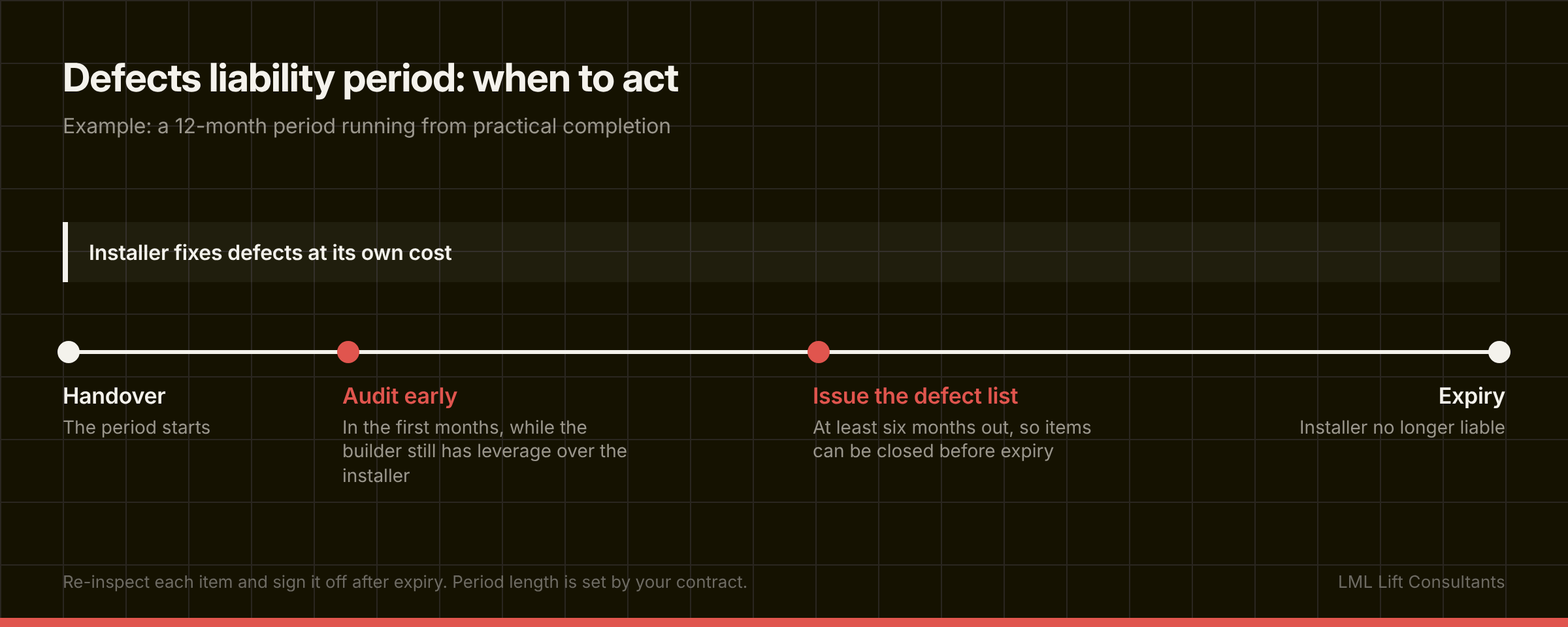
Book an independent audit early, in the first months after handover, while the builder still has leverage over the installer. That leaves time to issue the defect list, have the installer fix each item and re-inspect before expiry. Hold it at least six months before the period ends, so there is room if an item is disputed.
What the audit looks for
Ride quality and levelling under real use
Door operation, protection and timing
Safety devices and test records
Workmanship in the machine room, liftwell and pit
Items left incomplete at handover
Documentation: manuals, drawings, test certificates and log books
Door adjustment, levelling drift, noise, faulty fixtures and incomplete handover documentation are all typical of what an end-of-period audit turns up.
Getting defects fixed
Issue the defect list formally before the period ends, and quote the contract clause.
Agree a completion date for each item.
Re-inspect and sign off each item.
Keep records in case any item is disputed.
Notify before expiry
A defect notified after the period ends may no longer be the installer's cost. Get the list in before the deadline, even if the fixes run past it.
New apartment buildings
In a new strata building, the developer usually hands the Lifts to an owners corporation that may not know the period exists, or when it ends. Asking the developer for the handover documents early makes the audit straightforward. Committees in their first year should ask the strata manager when the Lift defects liability period ends, and book the audit early. See lift services for owners corporations.
Support for the whole defects liability period
The first year after handover is often the most demanding for a new Lift, because teething problems cause disruption just when owners and tenants expect perfection. LML's Defects Liability Period Managers Assistance Package (DLP-MAP) supports owners from day 1 (practical completion) to day 365. It includes:
Quarterly meetings with building management and the Lift contractor, with minutes
Monthly breakdown reports from the contractor, reviewed for trends and concerns.
Certification of any chargeable invoices for work the contractor says falls outside defects liability maintenance
Direct access to an LML consultant for questions as they arise
Defects commonly found at the end of the period
Every installation is different, but end-of-period audits often find:
Door operation that needs adjusting: timing, closing force, noise or reopening
Levelling that has drifted as the Lift beds in
Noise or vibration in the car or adjoining spaces
Faulty fixtures: indicators, buttons, lighting or the emergency phone
Incomplete documentation: manuals, drawings or test certificates still to be supplied
Minor damage to finishes from the construction period
What owners often miss at handover
The defects liability period starts at handover, which is also when owners are least likely to be checking. The Lifts are new and look good, and everyone is relieved the project is finished. These items are easy to miss:
Incomplete documentation: manuals, wiring diagrams, test certificates and spare parts lists
Temporary fixes left in place after commissioning
Items deferred at handover and never followed up
Training for building staff on emergency procedures
A defects timeline
At handover: agree a list of any incomplete items and the dates to finish them.
In the first months: hold the independent audit and check early issues, such as door adjustment and levelling, while the Lifts settle in.
At least six months before expiry: issue the formal defect list.
Before expiry: have the installer complete each item.
After expiry: re-inspect each item and sign it off. A re-inspection once the period has closed is often worth doing.
Keep the retention until the list is closed
Where the contract holds back a retention or security, don't release it until the defect list is closed.
Questions people ask
How long is the defects liability period for lifts?
It is set by the installation or modernisation contract, and is typically 12 months from practical completion. Some Lift Contractors offer longer.
Who pays for the defects audit?
Usually the owner. The audit costs little compared with fixing defects after the period ends.
What if the installer won't fix a defect?
Go back to the defects clause in the contract. An independent audit report is strong evidence if the installer disputes the item.
Talk to us about a defects audit
LML Lift Consultants audits new and modernised lifts before the defects liability period ends and tracks every defect to completion.
{"@context":"https://schema.org","@graph":[{"@type":"Article","@id":"https://www.lmlliftconsultants.com.au/insights/lift-defects-liability-period#article","headline":"Defects Liability Period (DLP): what to check on your Lifts before the DLP ends","description":"What to check on new or modernised Lifts during the defects liability period (DLP), when to book the audit, and how to get the installer to fix defects at no cost to you.","image":"https://cdn.prod.website-files.com/6a7fb1da29c27a176bd73b52/6ab1c725c285e44560268c29_uUNJQyOT.png","datePublished":"2026-10-02T10:30:00.000Z","dateModified":"2026-10-02T10:30:00.000Z","author":{"@id":"https://www.lmlliftconsultants.com.au/#organisation"},"publisher":{"@id":"https://www.lmlliftconsultants.com.au/#organisation"},"mainEntityOfPage":{"@id":"https://www.lmlliftconsultants.com.au/insights/lift-defects-liability-period#webpage"},"inLanguage":"en-AU"},{"@type":"WebPage","@id":"https://www.lmlliftconsultants.com.au/insights/lift-defects-liability-period#webpage","url":"https://www.lmlliftconsultants.com.au/insights/lift-defects-liability-period","name":"Lift Defects Liability Period: What to Check","isPartOf":{"@id":"https://www.lmlliftconsultants.com.au/#website"},"breadcrumb":{"@id":"https://www.lmlliftconsultants.com.au/insights/lift-defects-liability-period#breadcrumb"},"primaryImageOfPage":"https://cdn.prod.website-files.com/6a7fb1da29c27a176bd73b52/6ab1c725c285e44560268c29_uUNJQyOT.png","inLanguage":"en-AU"},{"@type":"BreadcrumbList","@id":"https://www.lmlliftconsultants.com.au/insights/lift-defects-liability-period#breadcrumb","itemListElement":[{"@type":"ListItem","position":1,"name":"Home","item":"https://www.lmlliftconsultants.com.au/"},{"@type":"ListItem","position":2,"name":"Insights","item":"https://www.lmlliftconsultants.com.au/insights"},{"@type":"ListItem","position":3,"name":"Defects Liability Period (DLP): what to check on your Lifts before the DLP ends","item":"https://www.lmlliftconsultants.com.au/insights/lift-defects-liability-period"}]}]}
Get an independent view before you decide
We sell no equipment and take no commissions. Tell us about your building and a consultant will come back to you.